
Introduction
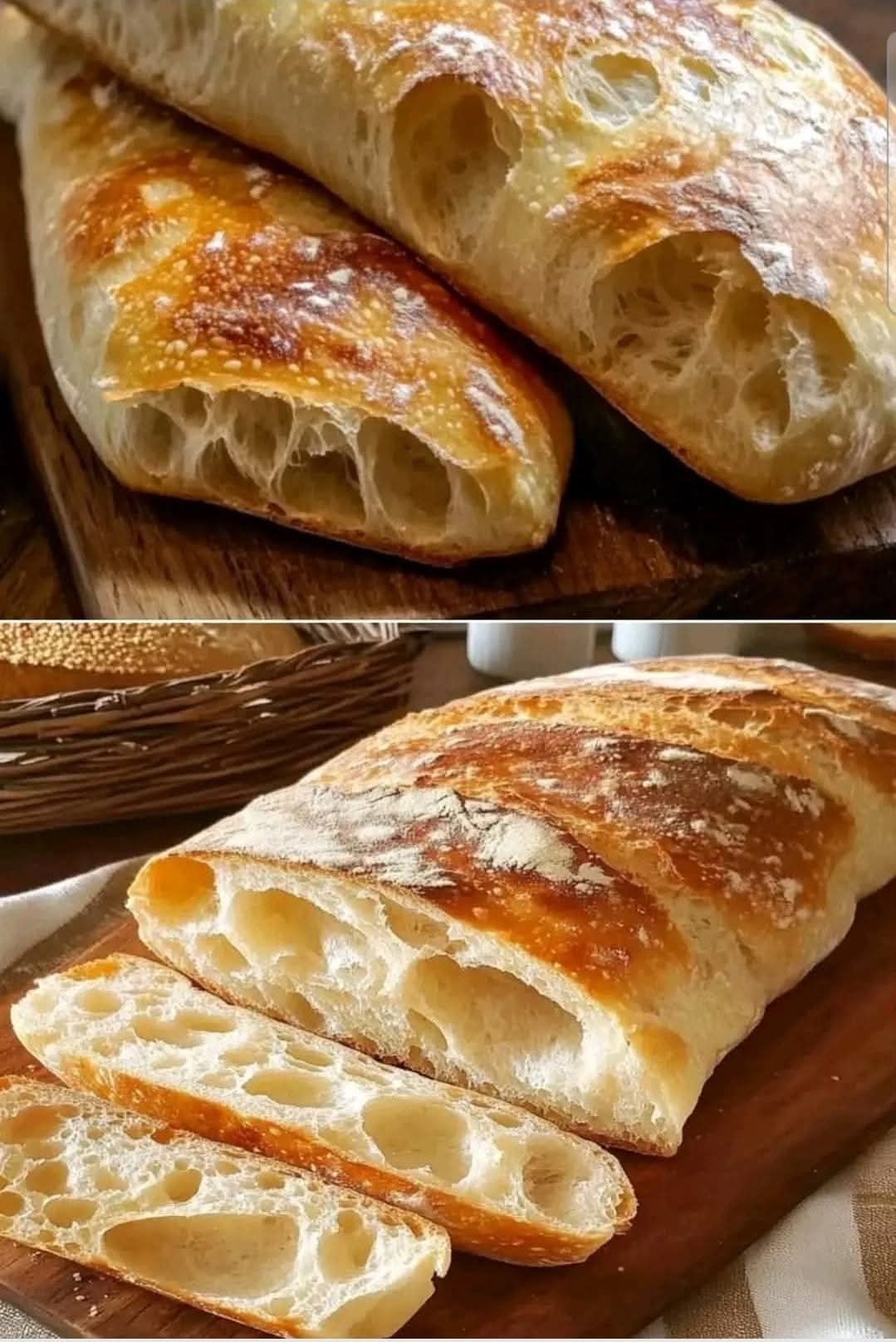
Ciabatta, meaning “slipper” in Italian, is a rustic bread known for its crispy crust, soft interior, and big air pockets. Originating from Italy in the 1980s, ciabatta has become a staple in bakeries around the world — perfect for sandwiches, bruschetta, or simply dipped in olive oil.
This recipe uses a biga (pre-ferment) to develop deep flavor and texture, creating that signature open crumb and chewy crust. Though it takes time, the process is simple and well worth it.
Ingredients
For the Biga (Pre-Ferment)
- 1 cup (130 g) bread flour
- ½ cup (120 ml) water, room temperature
- ⅛ teaspoon instant yeast
For the Main Dough
- All of the biga (above)
- 2 cups (260 g) bread flour
- ¾ cup (180 ml) water, lukewarm
- 1 teaspoon salt
- ½ teaspoon instant yeast
- 1 tablespoon olive oil (optional, for a softer crust)
Instructions
Step 1: Make the Biga (the night before)
- In a medium bowl, combine the flour, yeast, and water. Mix until a rough dough forms.
- Cover tightly with plastic wrap and let sit at room temperature for 12–16 hours, or overnight.
- The biga should be bubbly, aromatic, and slightly stretchy the next day.
Step 2: Mix the Dough
- In a large bowl, combine the biga, flour, yeast, salt, and water. Mix with a wooden spoon or your hands until well incorporated.
- The dough will be very sticky and wet — this is normal for ciabatta!
- Add olive oil (if using) and gently fold into the dough.
Step 3: Bulk Fermentation (First Rise)
- Cover the bowl and let the dough rise at warm room temperature (75–80°F / 24–27°C) for about 2 hours.
- Every 30 minutes, perform a stretch and fold:
- Wet your hands, grab one side of the dough, stretch it up, and fold it over itself.
- Rotate the bowl and repeat 3–4 times.
- After 4 rounds, the dough should feel more elastic and have visible bubbles.
Step 4: Shape the Ciabatta
- Generously flour your work surface and gently turn out the dough (do not punch down).
- With floured hands, shape it into a rectangle about 10 x 6 inches.
- Cut it in half lengthwise for two loaves.
- Transfer each piece onto a floured baking sheet or parchment paper.
- Cover with a towel and let rest for 30–45 minutes, until puffy.
Step 5: Bake
- Preheat your oven to 450°F (230°C) with a baking stone or an inverted baking tray inside. Place a shallow pan at the bottom of the oven for steam.
- Once preheated, slide the loaves (on parchment) onto the hot stone/tray.
- Quickly pour ½ cup of hot water into the bottom pan and close the oven door immediately (this creates steam for a crisp crust).
- Bake for 20–25 minutes, until golden brown and hollow-sounding when tapped.
Step 6: Cool and Enjoy
- Cool on a wire rack for at least 30 minutes before slicing.
- Serve with olive oil, butter, or use for panini or sandwiches.
Tips & Notes
- Hydration is key: The wetter the dough, the more open the crumb. Resist adding too much flour.
- Don’t over-handle: Gentle folding preserves the air bubbles.
- For extra flavor: Let the biga ferment longer in a cool place (up to 18 hours).