
Introduction
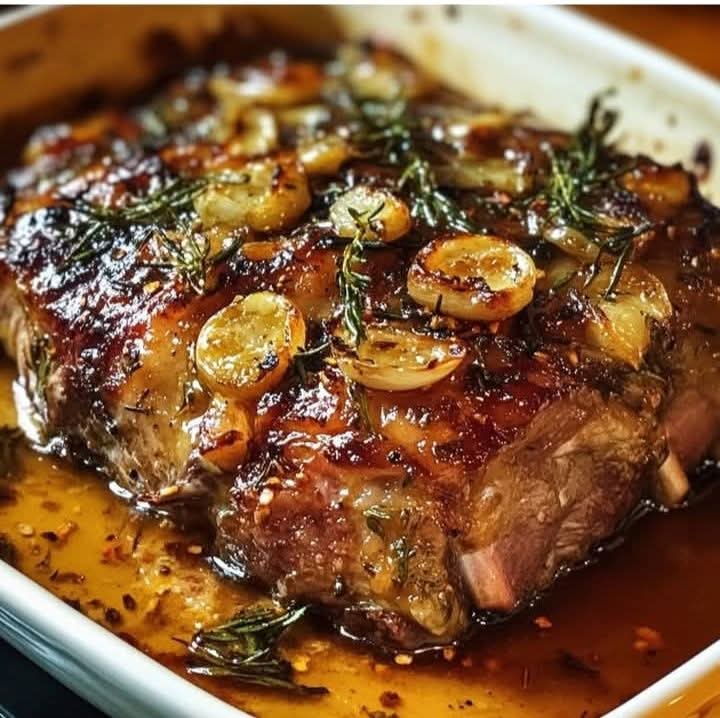
Slow-roasted lamb shoulder is one of the most comforting and impressive dishes in classic cuisine. Cooked gently over several hours, the tough connective tissue melts into rich, silky tenderness. In this version, the lamb is finished with a glossy glaze of honey, Dijon mustard, and garlic confit, balancing sweetness, sharpness, and deep savory flavor. The result is a dish that feels both rustic and refined—perfect for family gatherings, holidays, or special weekend meals.
History
Lamb shoulder has been prized for centuries in Mediterranean, Middle Eastern, and European cooking. Traditionally, slower and less expensive cuts were roasted for long periods in communal ovens, allowing time and heat to transform them into tender, flavorful meals.
- Honey has been used as a glaze since ancient times, especially in Roman and Middle Eastern cuisines.
- Mustard became popular in French cooking during the Middle Ages, often paired with roasted meats.
- Garlic confit, slow-cooked garlic in oil, is a classic French technique that softens garlic’s bite into a sweet, mellow richness.
This recipe brings together these traditions into a modern, approachable roast.
Ingredients
For the Lamb
- 1 whole lamb shoulder (2–2.5 kg / 4–5 lb), bone-in
- 2½ tsp salt
- 1½ tsp black pepper
- 2 tsp fresh rosemary, chopped
- 1 tsp fresh thyme, chopped
- Zest of 1 lemon
- 2 tbsp olive oil
For the Garlic Confit
- 12–16 garlic cloves, peeled
- 1½ cups olive oil (enough to submerge garlic)
- 2 sprigs thyme (optional)
For the Honey-Dijon Glaze
- 3 tbsp honey
- 2½ tbsp Dijon mustard
- 1 tbsp whole-grain mustard (optional)
- 1 tbsp lemon juice or apple cider vinegar
- 2 tbsp garlic confit (mashed)
- 1 tbsp olive oil
Instructions
1. Prepare the Garlic Confit
- Place garlic cloves in a small saucepan.
- Cover completely with olive oil and add thyme if using.
- Cook on very low heat for 45–60 minutes until garlic is soft and pale golden.
- Cool and reserve (store submerged in oil).
2. Prepare the Lamb
- Preheat oven to 160°C / 320°F.
- Pat lamb shoulder dry.
- Mix salt, pepper, rosemary, thyme, lemon zest, and olive oil.
- Rub mixture thoroughly over the lamb.
- Place lamb in a roasting pan, fat side up.
3. Slow Roast
- Cover tightly with foil or a lid.
- Roast for 3½–4½ hours, until the meat is fork-tender and pulling away from the bone.
- Remove foil and increase oven to 220°C / 425°F.
4. Glaze & Finish
- Mix all glaze ingredients until smooth.
- Brush generously over the lamb.
- Return to oven uncovered for 20–30 minutes, basting once, until caramelized and golden.
- Rest lamb for 20 minutes before carving or shredding.
Methods (Why This Works)
- Low and slow roasting breaks down collagen into gelatin, creating tenderness.
- Garlic confit removes harsh sulfur compounds, leaving sweetness.
- Honey caramelizes quickly at high heat for a glossy finish.
- Dijon mustard cuts richness with acidity and spice.
- Resting the meat allows juices to redistribute for maximum flavor.
Benefits
Nutritional Benefits
- High-quality protein for muscle growth and repair
- Rich in iron and zinc, supporting energy and immunity
- Garlic provides antioxidants and supports heart health
- Slow cooking reduces the need for excess fats or sauces
Culinary Benefits
- Uses a budget-friendly cut with luxury results
- Scales easily for gatherings
- Can be made ahead and reheated beautifully
- Versatile leftovers (sandwiches, wraps, salads)
Formation (Plating & Serving)
Presentation
- Serve on a large warm platter
- Arrange lamb in large pulled chunks or thick slices
- Spoon glaze and roasting juices over the top
- Garnish with fresh rosemary, thyme, or lemon wedges
Ideal Accompaniments
- Roasted potatoes or creamy mashed potatoes
- Honey-glazed carrots or roasted root vegetables
- Simple green salad with lemon vinaigrette
- Flatbread or crusty bread to soak up juices